P.O Box 01, Nakasongola - Uganda| Tel: 0392 797699 | E-mail: [email protected]

ASSESSING THE QUALITY OF DRINKING WATER AT SOURCE AND POINT OF CONSUMPTION IN NAKASONGOLA DISTRICT
Welcome to Nakasongola District
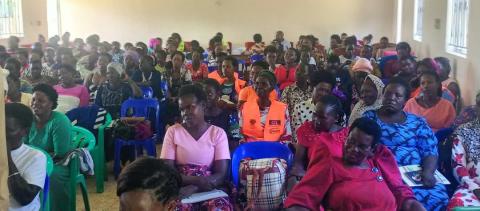
Nakasongola District Launches 5-Day Essential Business Skills Training for Women Entrepreneurs Under the GROW Project
Scores of women entrepreneurs from across Nakasongola District have gathered at Rhino Hotel for the opening session of an intensive, five-day Essential Business Skills Training under the Generating Growth Opportunities and Productivity for Women Enterprises (GROW) Project.
The GROW Project is a Government of Uganda initiative implemented by the Ministry of Gender, Labour and Social Development (MGLSD) in partnership with the Private Sector Foundation Uganda (PSFU) and supported by the World Bank. Designed to transition female-owned enterprises from micro to small, and from small to medium scale, the project equips women with the practical tools, mentorship, and financial access required to scale their businesses.
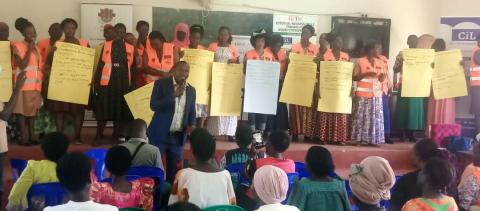
During the opening session at Rhino Hotel, participants engaged in interactive group exercises and presentations aimed at assessing their current business operations and identifying areas for growth. Facilitators guided the entrepreneurs through foundational concepts tailored to local business realities.
Beyond workshop’s instruction, completing the Essential Skills Training positions Nakasongola’s women entrepreneurs to tap into broader GROW Project opportunities, including district-level Women Entrepreneurship Platforms (WEPs) for ongoing mentorship, work placements, competitive grants, and affordable GROW business loans.
By: District Communication Officer
Publication Type:
Abstract Drinking water quality assessed from the source to the point of consumption in Nakasongola District. The purpose of the research was to locate specific points where contamination of drinking water occurs and assess the water handling practices affecting its quality. 109 households were visited and 333 samples from their sources of water, transport and storage containers were analysed. The quality of water was measured using Escherichia coli as an indicator for faecal contamination and diarrhoeal disease cases experienced in the last three months. The research found that 55.3% water samples from rural setting indicated that contamination occurs at the source as opposed to 50.7% from urban setting with regard to storage in the household. On interviews, 76% of the households indicated that faecal contamination occurs at the source. It is recommended that water from various sources be treated. Water supply programs should focus on sanitation practices at the point of consumption.
